How to Choose the Right Garage Door Company in Upper West Side
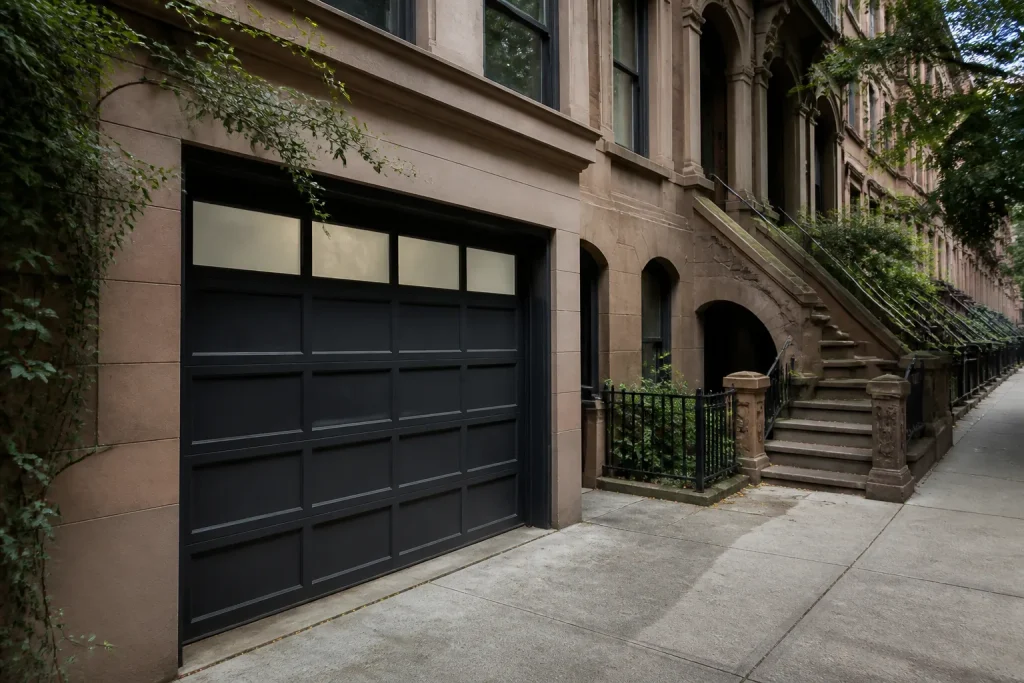
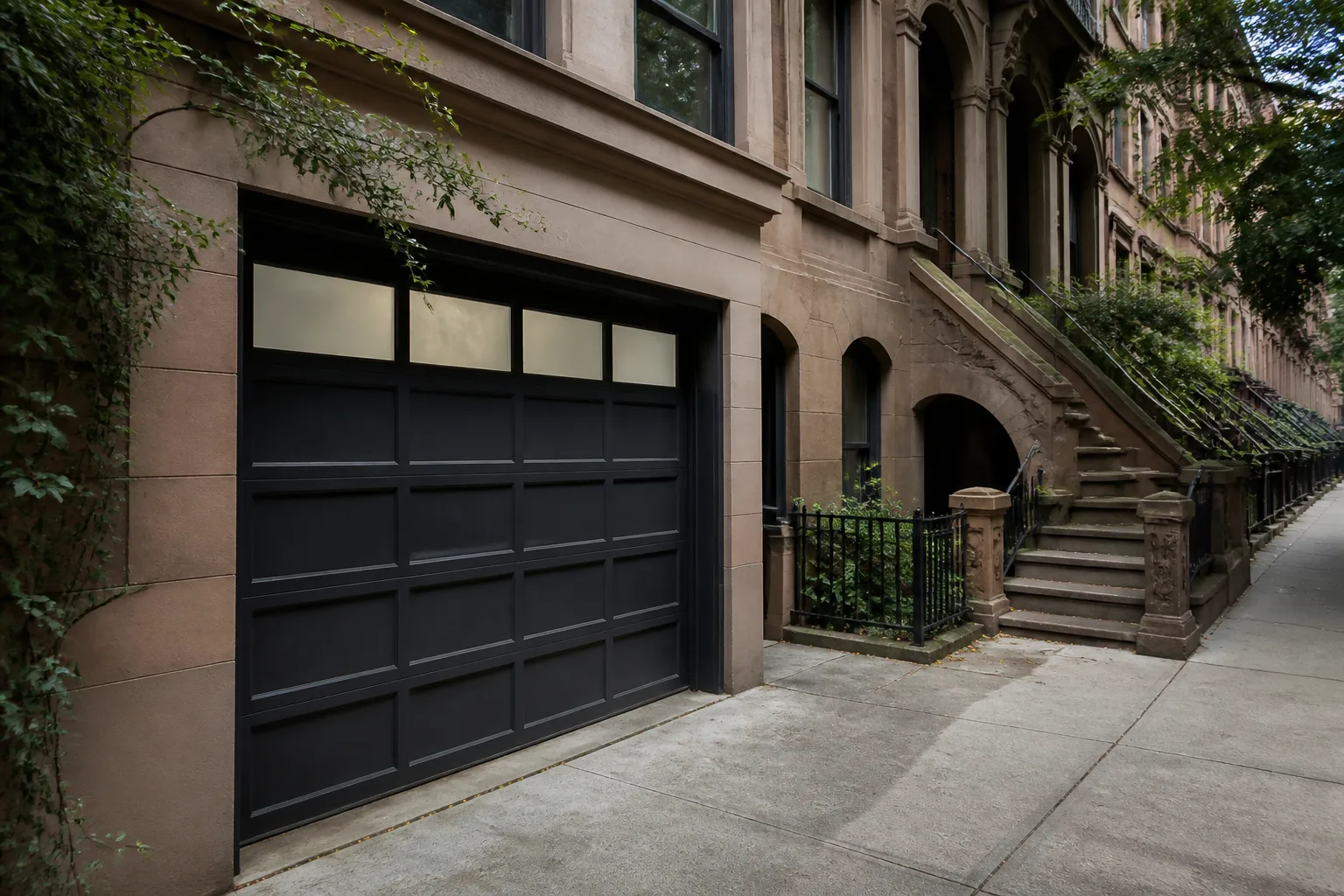
A five-star rating built in Westchester or Long Island tells you almost nothing about how a company will perform on a below-grade Upper West Side garage with a seven-foot rough opening, a co-op board approval requirement, and a service window that ends at 5pm. Google reviews measure where a company’s reputation lives, not where its vans actually park. The filter that matters here is narrower: demonstrated fluency with Manhattan building access, NYC permit processes, and the structural realities of pre-war garages. If you’d rather skip the vetting and just talk to a specialist, call (866) 937-7438.
What’s the difference between a garage door specialist and a multi-trade contractor?
A garage door specialist does one thing, which means the diagnostic vocabulary is sharper and the parts knowledge is deeper. A multi-trade contractor handles doors alongside plumbing, HVAC, and general contracting, so the garage door work is often the least-exercised skill in the business.
That gap shows up in two places: diagnosis accuracy and parts availability.
Diagnosis first. A door that binds and reverses isn’t automatically a motor problem. It could be a worn roller, a misaligned track, a tired torsion spring, or a limit switch set wrong on a LiftMaster or Chamberlain unit. A specialist sorts that out on the first visit. A generalist often replaces the opener when the door was the issue all along.
Parts second. Upper West Side garages hold an enormous range of equipment. Pre-war buildings often have older Wayne Dalton or Craftsman hardware; newer conversions trend toward Clopay doors with LiftMaster or Genie operators. A single-trade shop works on these systems constantly and knows what fits. A multi-trade contractor orders blind and hopes.
- Ask what percentage of their work is garage doors. A specialist will answer instantly with a number close to 100%.
- Ask which brands they service. Vague answers (“all major brands”) are weaker than specific ones.
- Ask how they diagnose a door that won’t close. A good answer mentions springs, tracks, sensors, and limits, not just the motor.
We work on the brand already in your garage. No replacements pushed unnecessarily, no guesswork about what’s installed.
How do you verify a garage door contractor’s permit history in NYC?
You use the NYC Department of Buildings contractor lookup before you ever pick up the phone. It’s public, it’s free, and it tells you whether the company can legally file the permit your job may require.
- Open the DOB’s online licensing and contractor search. The city publishes this information for exactly this purpose.
- Search by company name or license number. Confirm the license is active, not expired or suspended.
- Look at the filing history. A contractor with real Manhattan experience has permit records on file. A company that only works in the suburbs may have none in the five boroughs.
- Ask the company directly which license they’ll file under. A confident specialist answers without hesitation. A hesitant one is telling you something.
Permit requirements vary by job type and building, so confirm the specifics with the city’s building department before work begins. What matters for your vetting is simpler: a company that routinely files permits in Manhattan will know the process cold. One that doesn’t will treat it as an obstacle. On Upper West Side jobs in co-op and condo buildings, that difference can stall a project for weeks.
What should you ask about a company’s Upper West Side work history?
Don’t ask “do you serve Manhattan.” Every company in the tri-state area says yes. Ask how many jobs they’ve completed in pre-war private garages in the past year, and listen to what comes back.
A specialist with genuine Upper West Side experience will describe the actual conditions: tight ceiling clearances, low headroom, doors that open onto interior courtyards, garages carved out of basement space with structural beams cutting through. They’ll mention how building access affects the job, whether equipment comes through a service entrance or down a ramp. They’ll know that a seven-foot rough opening is common and that a standard eight-foot door isn’t going in without a plan.
Vague answers are the tell. “We work all over the city” is not a work history. “We’ve done dozens of pre-war private garages on the Upper West Side” is. Ask for specifics about the type of building and the type of door. If the answers stay generic, the experience probably is too.
This matters most for garage door installation, where a measurement error isn’t a nuisance, it’s a wasted custom order and a weeks-long delay.
Which warranty terms should you actually read?
Parts-only versus parts-and-labor is the single most important distinction in a garage door warranty, and it’s the one homeowners skim past. A “lifetime warranty” that covers a $40 part but not the $200 in labor to install it is a marketing line, not protection.
- Parts-only: the manufacturer covers the component, you pay for the technician’s time. Common on springs and openers.
- Parts-and-labor: the company covers both for a defined period. This is what you want on repair work.
- “Lifetime” claims: read the contract language. Lifetime usually means the life of the part, or the original purchaser, or a defined number of cycles. It rarely means what the phrase suggests.
- Spring coverage: springs are the most failure-prone component and the most disputed warranty item. Get the coverage window in writing before the job starts.
- Exclusions: damage from impact, neglect, or a non-qualified installer voiding coverage. Know them up front.
If a company won’t put warranty terms in the written estimate, treat that as a no. On Upper West Side buildings where a failed door can mean a resident can’t park, the warranty is the difference between one phone call and three. A specialist who stands behind spring work in writing is telling you they expect it to hold.
Why is same-day availability for a quote a warning sign in NYC?
Legitimate specialists have full schedules. If a company can send someone to measure a new door the same afternoon you called, ask yourself what they’re not doing.
Genuine same-day availability belongs to emergency work: a door stuck open, a snapped spring, a door that won’t close before the building locks. That’s a real service and a real sign of a responsive company. garage door repair is where speed matters, and the good shops move fast when the door is down.
But installation and replacement work is measured, ordered, and scheduled. A company with a full calendar of Upper West Side jobs will fit you in when it fits, and that’s the company you want. Idle capacity on non-urgent work usually means one of two things: the business is new and hungry, or it’s not really a garage door specialist and the schedule is empty because the phone isn’t ringing with door work.
We’d rather tell you we’re booking out than show up tomorrow and measure wrong. Garage door opener repair and emergency calls are a different story: when the door won’t move, we move fast.
When to call a pro
Springs, cables, and anything involving the torsion assembly are not homeowner territory. High-tension springs store enormous energy, and a spring that lets go during a DIY attempt can cause serious injury. If you see a gap in a spring coil, hear a bang from the garage, or the door suddenly feels impossibly heavy, stop and call a trained professional. The same goes for opener wiring and any work near the electrical panel. Check the door, don’t fix it yourself.
Related services in Upper West Side: garage door repair covers diagnostics and mechanical fixes, and our main garage door repair page outlines the full range. For the service overview, start at Garage Door Repair Upper West Side.
The Bottom Line
The right garage door company for an Upper West Side building is the one that can prove it’s worked in buildings like yours. Verify the DOB license and permit history. Ask about pre-war private garage experience in specific terms. Read the warranty for parts-and-labor coverage. And treat same-day non-emergency quotes with mild suspicion rather than relief.
A specialist who knows LiftMaster, Chamberlain, Genie, Clopay, Amarr, Wayne Dalton, Craftsman, and Raynor hardware will diagnose correctly the first time, order the right part, and stand behind the work. Our technicians have up to 12 years of experience, and we quote the price and agree it with you before any work starts.
If you’re in Upper West Side and need help, Garage Door Repair Upper West Side offers free estimates – call (866) 937-7438.
Frequently Asked Questions
It depends on the failure, and any company quoting a flat number over the phone is guessing. Spring work, opener repair, track and roller service, and panel replacement all carry different labor and parts costs. Ask for a written estimate after an on-site look, and confirm the price is agreed before work begins. Call (866) 937-7438 for a free estimate.
Emergency service is a core offering for us, not an upsell. A door stuck open or stuck closed is a real problem in a building where residents need access, and we treat it that way. Standard installation and replacement work is measured and scheduled, not same-day. Call (866) 937-7438 and we’ll tell you honestly what’s possible.
No. The written estimate is the price. We quote before any work starts and agree the number with you, so there’s no invoice surprise afterward. If we find something the estimate didn’t cover, we discuss it with you first. Call (866) 937-7438 for an exact quote.
Yes. We service LiftMaster, Chamberlain, Genie, Clopay, Amarr, Wayne Dalton, Craftsman, and Raynor equipment. Brand-specific diagnostics mean we know what’s in your garage before we arrive, so we don’t push a replacement when a repair is the right call. Call (866) 937-7438 to confirm your model.
Written by the team at Garage Door Repair Upper West Side.
Need Garage Door Help?
Call Garage Door Repair Upper West Side - the local pro we connect you with is licensed and insured, here with fast after-hours help in Upper West Side.
(866) 937-7438