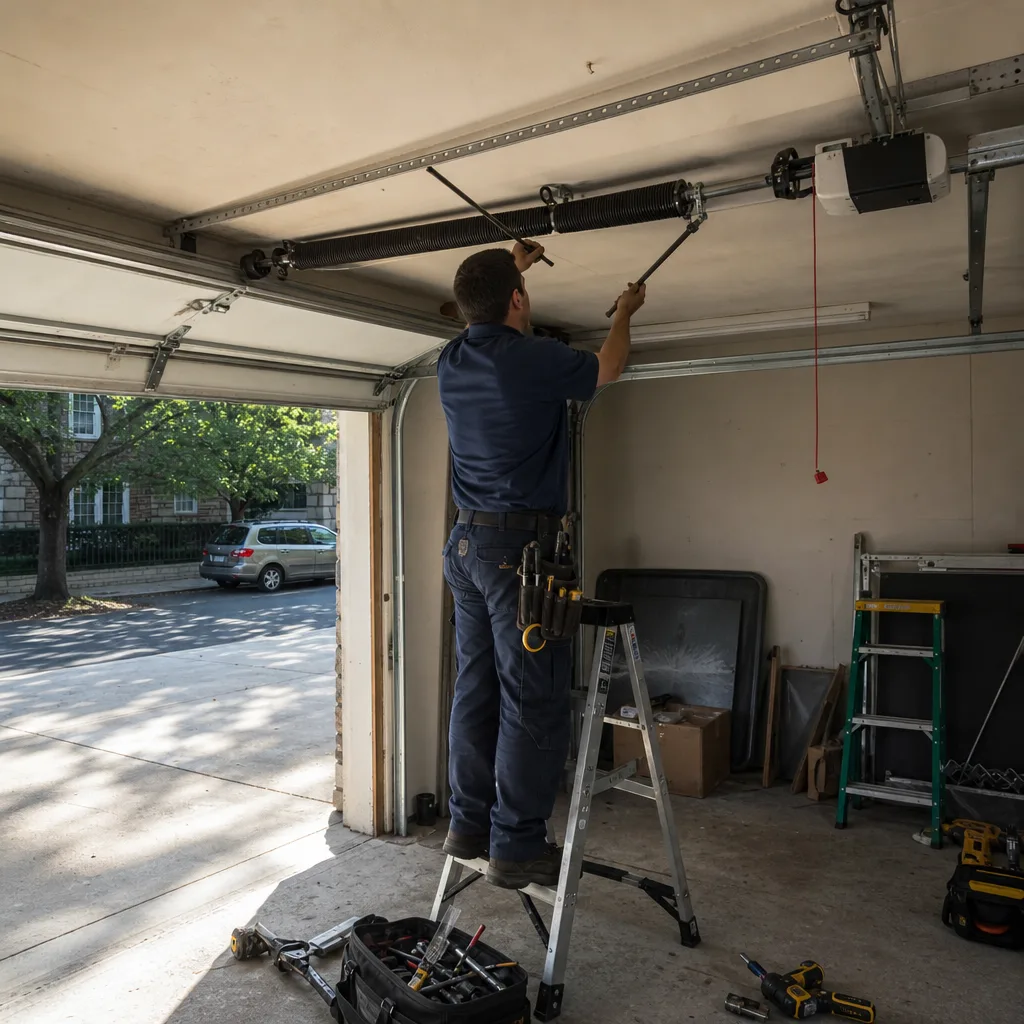
Last updated November 20, 2026
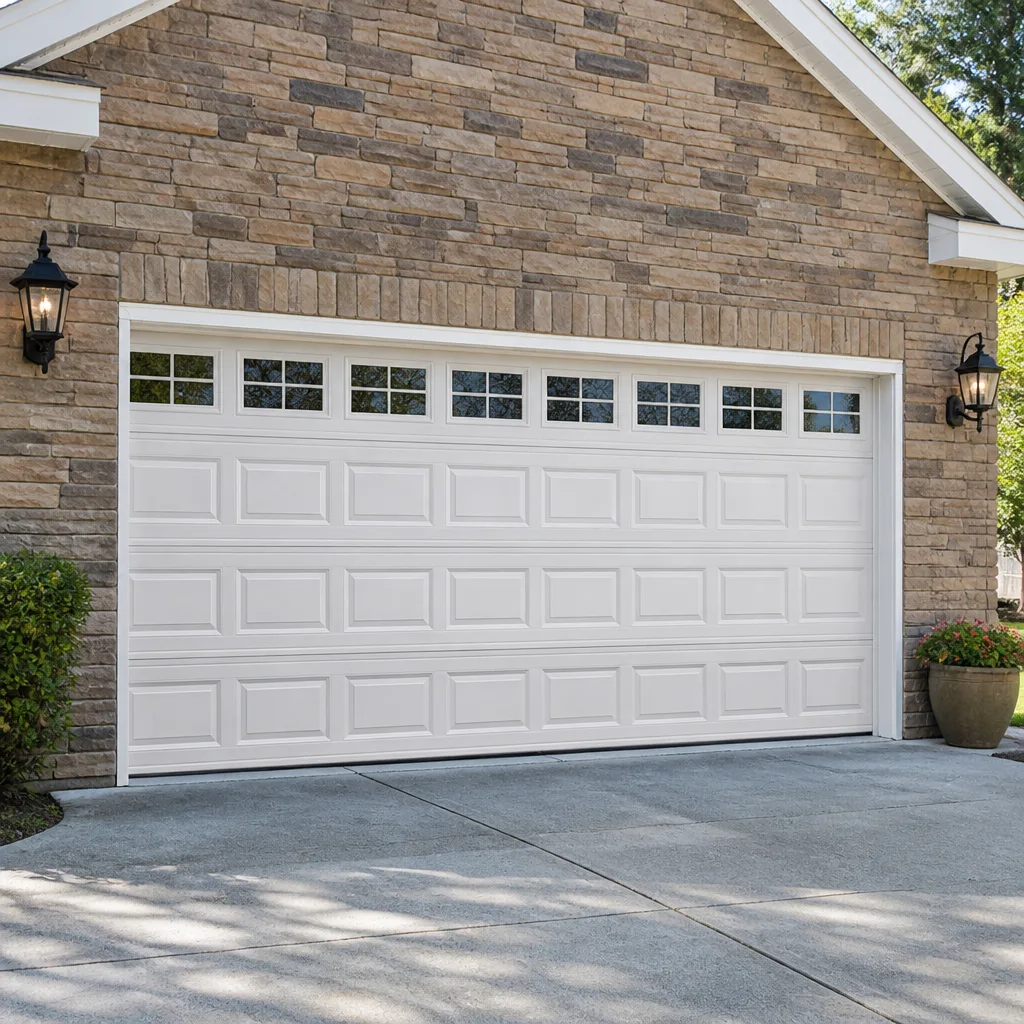 Raised-panel steel
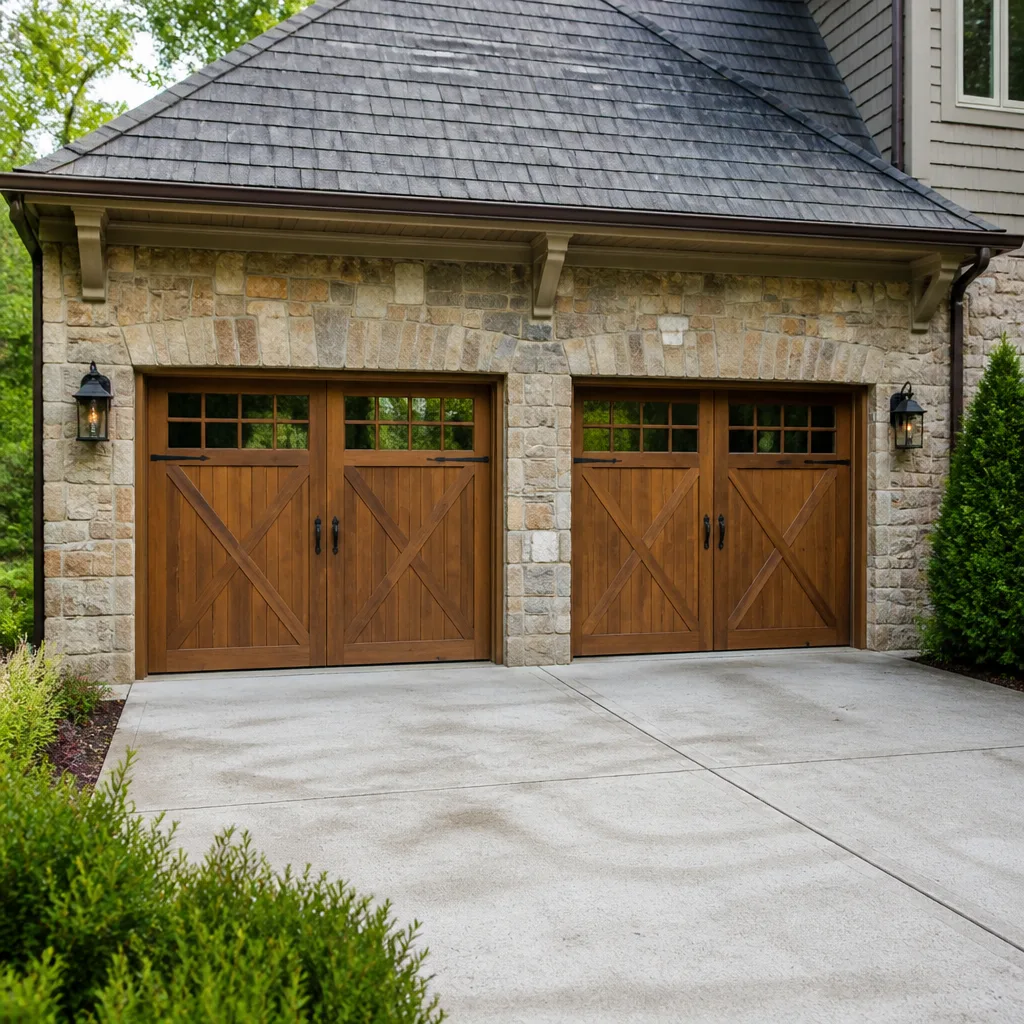 Carriage house
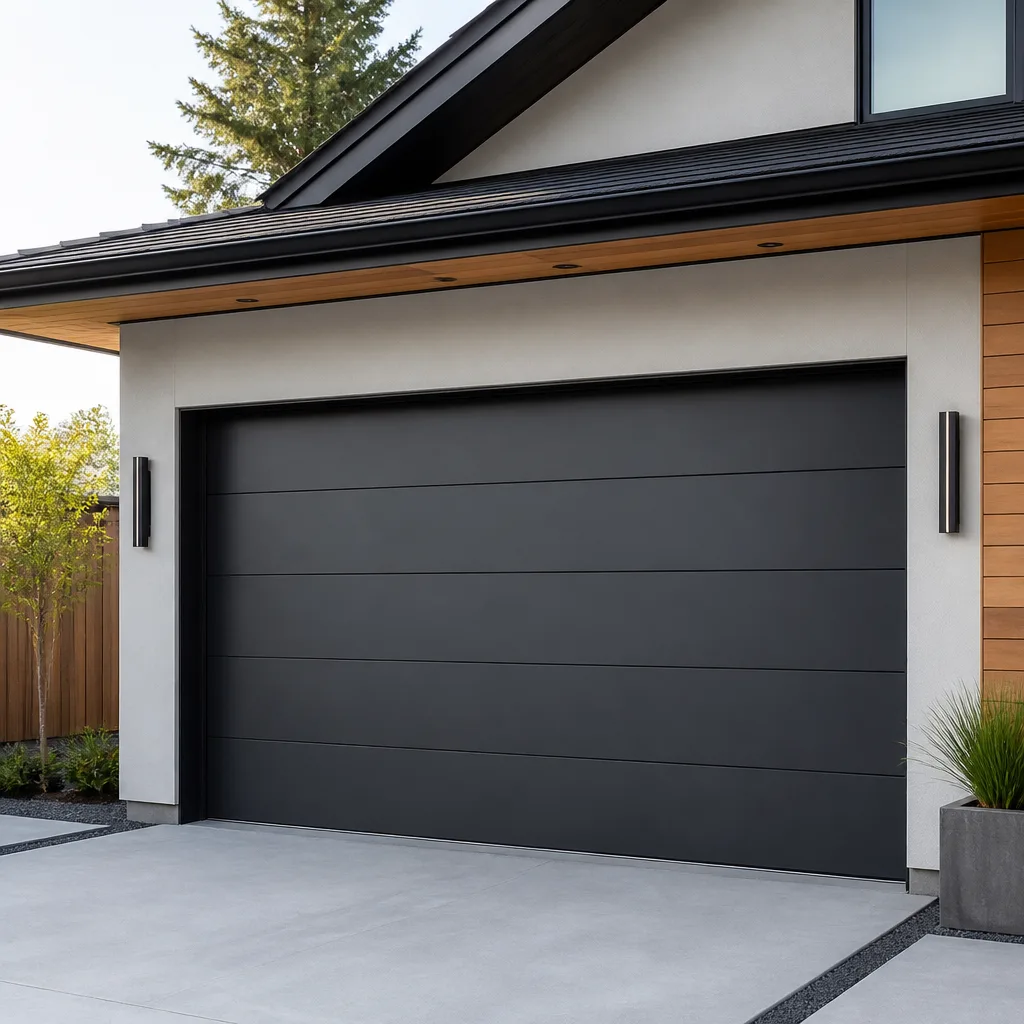 Modern flush
 Full-view glass
 LiftMaster openers
 Chamberlain openers
Full 25-point door and opener safety check with every visit - springs, cables, rollers, tracks, and your LiftMaster or Chamberlain opener included
You get a price before we start. It does not change when the pro arrives.
Get your free estimateGarage Door Repair Maintenance Checklist for Upper West Side Homeowners
Most garage door maintenance checklists are written for suburban driveways where a car leaves twice a day, every day. If you use your door fewer than four times a week, that advice doesn’t fit. The wear patterns that matter here aren’t cycle counts, they’re what happens to a door that sits idle for days inside a building where temperature swings, moisture, and tight clearances do the real damage. We wrote this guide specifically for Upper West Side door owners and the particular conditions of apartment house garages, prewar carriage entries, and below-grade parking. You’ll learn which components actually fail under low-use conditions, how to inspect them, when to lubricate, and which tasks belong on a quarterly versus annual schedule. If you’d rather have a specialist look, start with Garage Door Repair Upper West Side.
Quick Answer
A garage door maintenance checklist for Upper West Side homeowners should focus on spring and hinge corrosion, balance, sensor alignment, and weather seal condition, checked quarterly, rather than high-cycle wear that dominates suburban guides. If your door runs fewer than four times a week, annual lubrication intervals are too infrequent for a variable-temperature garage and should move to quarterly. Any inspection that reveals a damaged spring, frayed cable, or loose bottom bracket is a stop-use situation and a call to a trained technician.
Styles & brands we work with
- Raised-panel steel
- Carriage house
- Modern flush
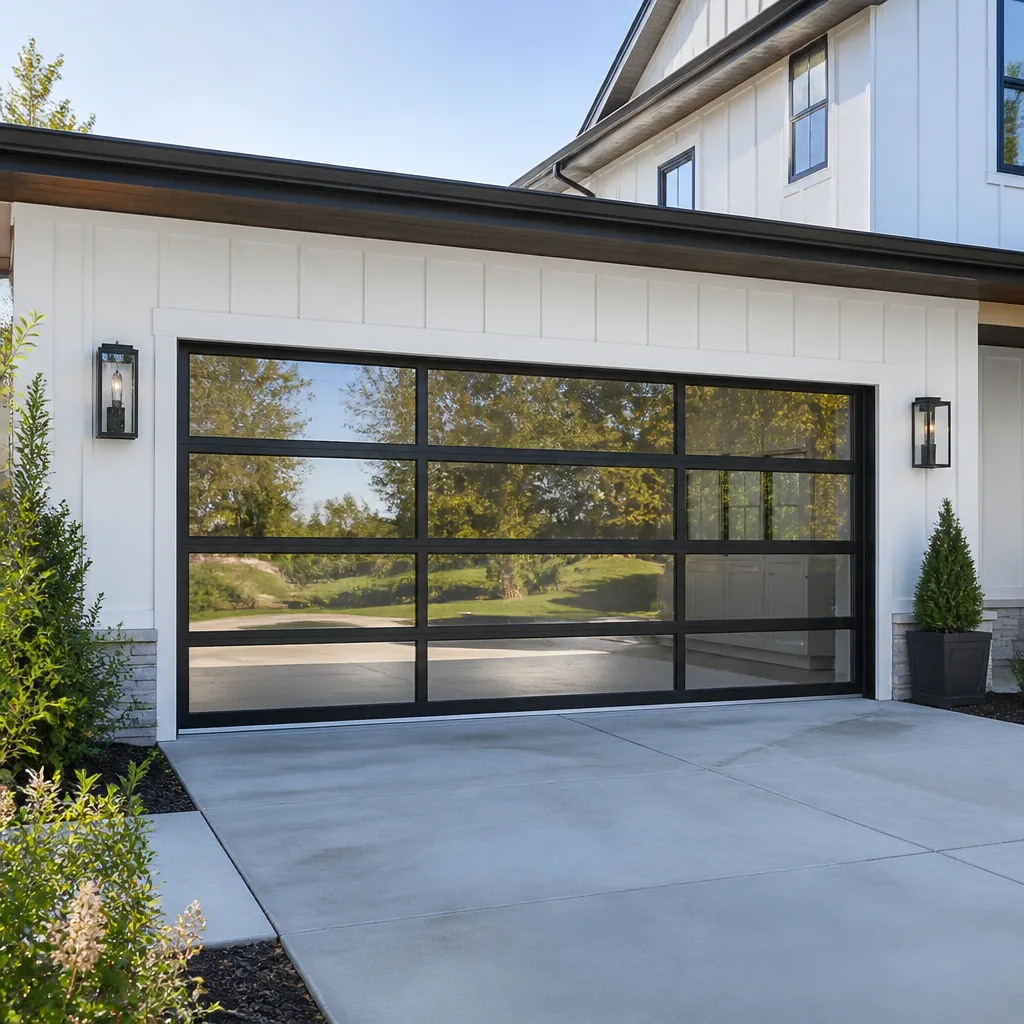
- Full-view glass
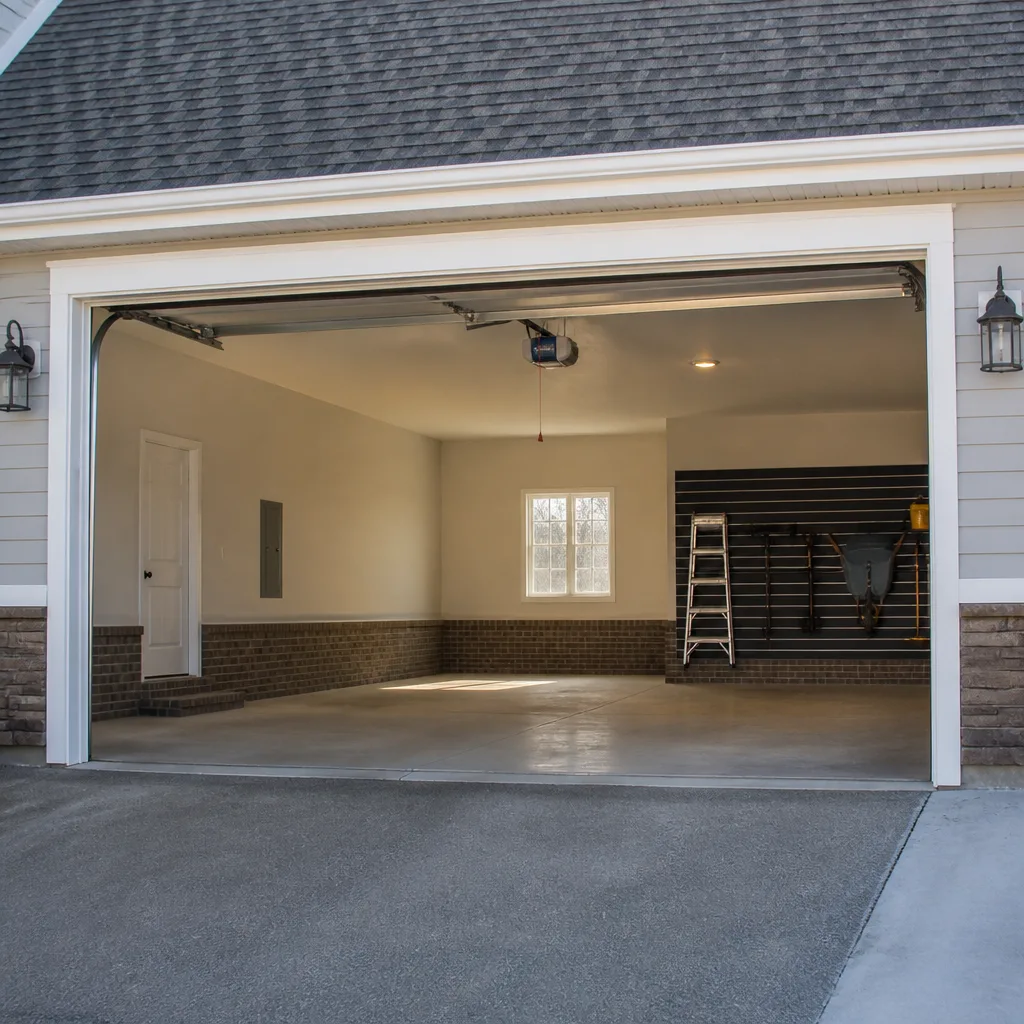
- LiftMaster openers
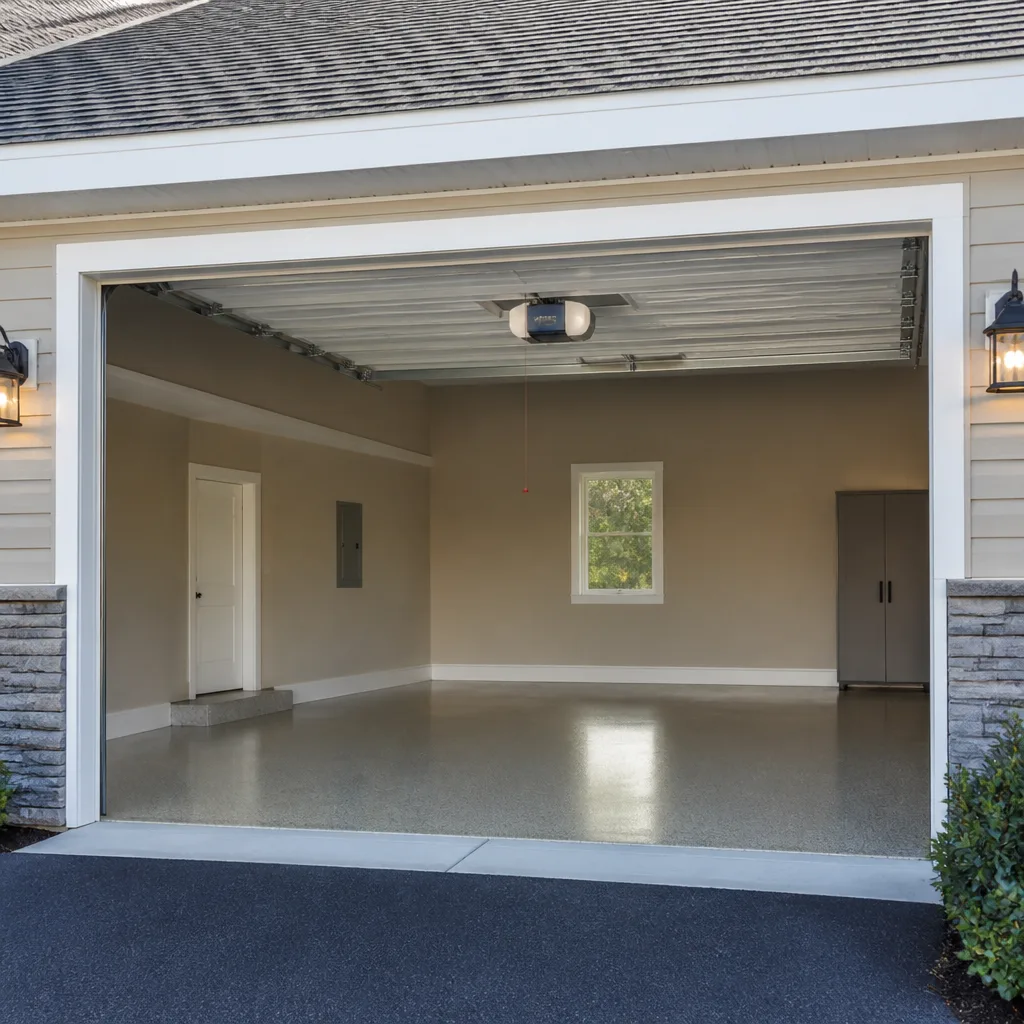
- Chamberlain openers
Table of Contents
- Why Low-Frequency Use Changes the Checklist
- Springs and Hinges: What Idle Storage Does to Metal
- Lubrication: Products, Intervals, and Frequency
- Below-Grade Inspections: Moisture, Seals, Bottom Brackets
- Testing Auto-Reverse and Photo-Eye Sensors in Tight Urban Garages
- Quarterly vs. Annual Tasks by Component Lifespan
- Brand-Specific Diagnostics: Clopay, Amarr, LiftMaster, Genie
- Common Mistakes to Avoid
- When to Call a Professional
- Frequently Asked Questions
Why Low-Frequency Use Changes the Checklist
The standard maintenance checklist assumes a door that opens and closes four or more times a day. Spring life, lubricant recoating, hinge wear, roller smoothness, all the classic entries assume a baseline of daily movement. When a garage door sits closed for three or four days at a time, cycling wear stops being the primary concern. What takes over is stasis: oil films dry out, condensation settles on the highest or coldest surface, and metal that isn’t moving doesn’t redistribute lubricant across itself.
On the Upper West Side this pattern shows up constantly. Long weekends, season changes, and travel increase the stretch of days a door stays shut. Rather than a 200-cycle seasonal count, the door sees 40 cycles and 80 idle days. The result is a failure mode that has nothing to do with cycling and everything to do with the environment inside a Manhattan garage.
We tell Upper West Side homeowners to reorder the checklist around three questions:
- How many days in a row did the door sit idle this quarter? Long idle stretches, especially combined with seasonal temperature swings, accelerate surface corrosion and dry out hinge pins.
- Is the garage temperature-controlled or exposed? Upper West Side garages vary from below-grade structures with limited airflow to older buildings where the door faces a courtyard or alley. Doors exposed to a swing from 25°F in February to 90°F in July refresh the grease more often than doors in a stable tunnel.
- Is the door facing exterior moisture sources? An alley-facing or courtyard-facing door takes weather the door doesn’t see in a suburban driveway. The bottom seal and bottom bracket shortlist itself accordingly.
Reorder the checklist around these and you’ll catch the failures that actually happen here – not the ones a template written for a Phoenix suburb imagines.
Springs and Hinges: What Idle Storage Does to Metal
Standard spring and hinge wear is a function of cycle count. A torsion spring rated for 10,000 cycles tolerates around 10,000 open-close runs before it typically fails. Under idle-use conditions the more pressing timeline isn’t cycles, it’s surface condition. An Upper West Side torsion spring stored under tension for six days at a time parks in a position where condensation accumulates on the same few coils. Multiply that across a heating season and you get visible pitting on a spring that has barely moved.
What we watch for on Upper West Side spring inspections:
- Pitting and rust bloom on torsion springs. Any orange or brown surface bloom on a torsion spring is a flag. Cycle count doesn’t predict this; local surface condition does.
- Extension spring corrosion at the crimped ends. Older Clopay and Wayne Dalton doors often carry extension springs mounted above the tracks. The crimp at each end is where moisture naturally collects and where fatigue begins.
- Hinge pin rust and dry hinge joints. Numbered hinges down each side of the door will seize long before the rollers do at low cycle counts. Move them by hand once a month to check.
- Bottom bracket rust. On any door, but especially on doors near below-grade entries, the bottom bracket sits where water pools. It is one of the highest-load, highest-consequence connections on the whole assembly.
Safety first: Do not try to adjust, unwind, or replace a torsion or extension spring yourself. Both live under extreme tension and can cause serious injury. Visual inspection only. If you see a broken spring, an open gap in the coils, or a visibly bent arm, stop using the door and call a trained technician.
If you’re seeing rust or a door that won’t lift, schedule garage door spring repair before continuing to operate the door. Hint: we keep this as a dedicated service because it’s the most dangerous job in the trade, not a check-the-box add-on.
Lubrication: Products, Intervals, and Frequency
Lubrication is where most Upper West Side homeowners under-maintain by following suburban advice. The standard “once a year” interval assumes the door is cycling enough to redistribute product. A door that runs three or four times a week doesn’t. Recoat hinge points, rollers, and the torsion shaft every quarter on an idle door, and monthly on any door you notice is stiff or noisy on the first opening after a long idle stretch.
Product selection matters as much as frequency. Some of what works:
- White lithium grease for the torsion shaft, bearing plates, and roller stems. It stays where you put it, doesn’t run, and handles temperature variation well.
- Silicone-based lubricant for hinges and the rollers themselves. It won’t attract grit, and unlike oil it doesn’t become gummy in cold weather.
- Dry PTFE spray for the vertical and horizontal tracks. Never use grease on the tracks themselves; it traps dirt, and dirt is what causes wheels to jam in tight urban configurations where tracks see less airflow.
What we avoid:
- WD-40 or thin penetrating oils on the torsion shaft. They evaporate and leave the shaft drier than before.
- Any heavy grease on the tracks.
- Product on an extension spring’s coil body itself, which can trap grit against the coil and accelerate the corrosion you’re trying to prevent.
A quarterly lubrication walk-through takes 10 minutes on most Upper West Side doors. If a door is louder after you finish than before, or if a roller feels rough when you spin it, the lubricant isn’t the problem and a technician should look at it.
Below-Grade Inspections: Moisture, Seals, Bottom Brackets
Many Upper West Side buildings have garage space at or below street level. That shape of garage earns an extra inspection category most checklists don’t include. Below-grade garages hold humidity longer than street-level ones, drain more slowly, and leave the bottom of the door in contact with the floor surface for long periods. A door that sits closed on a damp slab develops problems on the bottom 18 inches that no amount of track lubrication fixes.
Every quarter, inspect:
- Bottom weather seal condition. Run your hand along the rubber U-seal at the bottom. Any crack, separation, or hard spot means the seal is failing, and every watering of the garage floor goes under the door.
- Floor line for standing moisture. A dark strip along the inside of the door threshold signals water that isn’t draining.
- Bottom bracket rust. The bottom bracket takes the most load of any hinge point on the door. Any visible rust bloom or brown streaking down the door panels means it should be looked at before it fails.
- Panel bottom edge delamination. Wood or steel-skinned panels that stay against a damp floor delaminate from the bottom up. Clopay and Amarr steel panels hold up better than wood, but the bottom edge is still the first failure point.
- Torsion shaft bearing plate corrosion. Harder to reach but worth checking: the bearing plates on either side of the shaft will show brown streaks if moisture is reaching the shaft area.
If you’re seeing seal cracks or bracket rust every time you look, the door and the space underneath it are asking for a technician. That’s a good moment to bring in garage door repair rather than guess at it yourself.
Testing Auto-Reverse and Photo-Eye Sensors in Tight Urban Garages
Photo-eye sensors on Upper West Side doors get tested less than they should, and when they do get tested it’s usually in a hurry and not calibrated to the space. Tight garages make sensor alignment more delicate, not less. If the door mechanism is within a few feet of a wall, parked car, or storage rack, the beam can reflect off a surface and read as clear when an obstruction is actually present.
Test the safety reverse monthly. The sequence:
- Open the door fully to reset the cycle.
- Place a solid object roughly the height of a shoebox flat on the floor in the door’s path, at the centerline.
- Close the door with the wall control or remote. The door should reverse on contact with the object.
- Remove the object and repeat the test with the photo-eye sensor blocked by hand as the door is closing. The door should reverse without contact.
- Check that the two photo-eye lenses are aligned and that neither one is fogged, dusty, or shaded by a mounted object.
Common misalignments in urban garages:
- A sensor bumped by a parked bike or stroller.
- Reflective floor paint confusing the beam.
- Gravel or debris under the sensor lens.
- A lens mount loosened by a door vibration and never re-tightened.
If the door refuses to reverse, or if the sensors need an adjustment you can’t dial in, that’s an opener issue. We can handle garage door opener repair on standard LiftMaster, Chamberlain, Genie, and Craftsman systems without needing to swap out an opener that’s working fine.
Quarterly vs. Annual Tasks by Component Lifespan
Most checklists split maintenance by season. That works when a door is cycling every day. For an Upper West Side door that sits idle, split by component lifespan instead. Springs and bearings reward frequent check-ins; panels and structural hardware can go a longer stretch. Here’s the split we recommend.
Quarterly
- Lubricate hinges, torsion shaft, roller stems, and bearing plates.
- Visually inspect torsion and extension springs for rust bloom or pitting.
- Check bottom weather seal for cracks and floor line for moisture.
- Test the safety reverse and photo-eye sensors.
- Check the tracks for debris and wipe them down.
- Balance test: lift the door halfway with the opener disconnected and confirm it holds.
- Inspect bottom bracket and lower hinge for rust.
Annual
- Full hardware tightening on the door and track assembly.
- Roller inspection and replacement where wheels are flat-spotted or noisy.
- Weatherstrip replacement at the sides and top if it’s dried out or missing.
- Opener force and travel limit re-calibration per manufacturer guidance.
- Full photo-eye sensor re-alignment and safety reverse confirmation.
- Panel surface condition review (delamination, rust, dents).
If you’re on the Upper West Side and your door sits idle for long stretches, err on the frequent side of the recent evidence. A door with a visible spring rust bloom at the quarterly check does not wait for its annual service.
Brand-Specific Diagnostics: Clopay, Amarr, LiftMaster, Genie
Knowing the specific equipment in a garage saves time on a diagnosis, which is why we train on the major residential brands rather than treating every door the same. On the door side, we work regularly on Clopay, Amarr, Wayne Dalton, and Raynor systems. On the opener side, LiftMaster, Chamberlain, Genie, and Craftsman. Each one has its own failure points worth knowing when you’re inspecting at home.
- Clopay doors are common in Upper West Side buildings and tend to fail first at the bottom panel, where steel skin meets the seal. Focus your below-grade inspection there.
- Amarr steel panels hold up well, but the hinge plates and track brackets tend to corrode ahead of the door itself in a below-grade space.
- Wayne Dalton extension-spring doors show fatigue at the crimp ends of the spring rather than the coil, so watch that specific point rather than only the middle of the spring.
- LiftMaster and Chamberlain openers use photo-eye sensors that are easy to knock out of alignment, and the logic board resents dust. Clean the lens monthly.
- Genie openers often need travel limit adjustments more frequently than the LiftMaster/Chamberlain line, especially on doors that see seasonal temperature swings.
- Craftsman openers and their remotes are the most common source of “opener works but door won’t close” calls, generally a sensor issue rather than a board failure.
When you know the brand, you know where to look first. That’s what we mean by brand-specific diagnostics rather than guesswork. If a diagnosis isn’t solving the issue, it’s often the moment when a full replacements decision deserves attention: our garage door installation service can walk you through the economics.
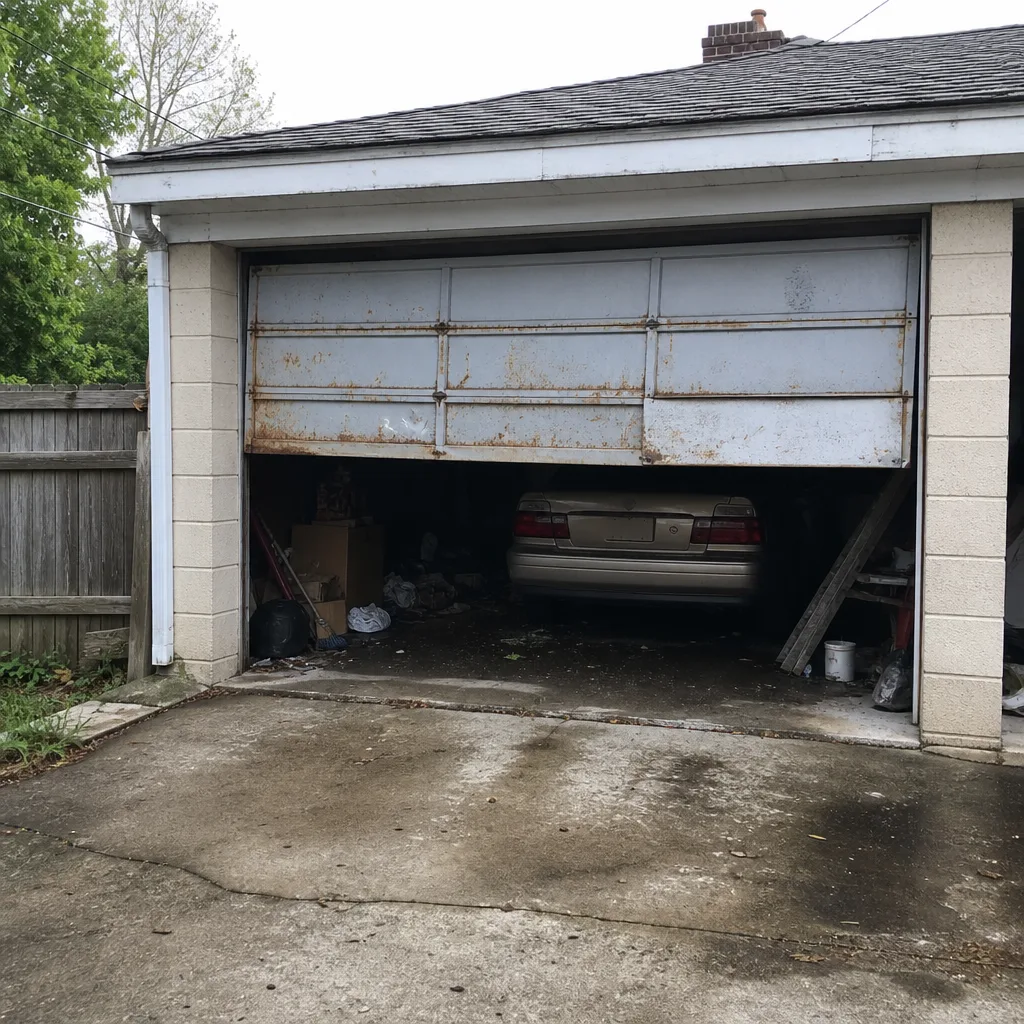
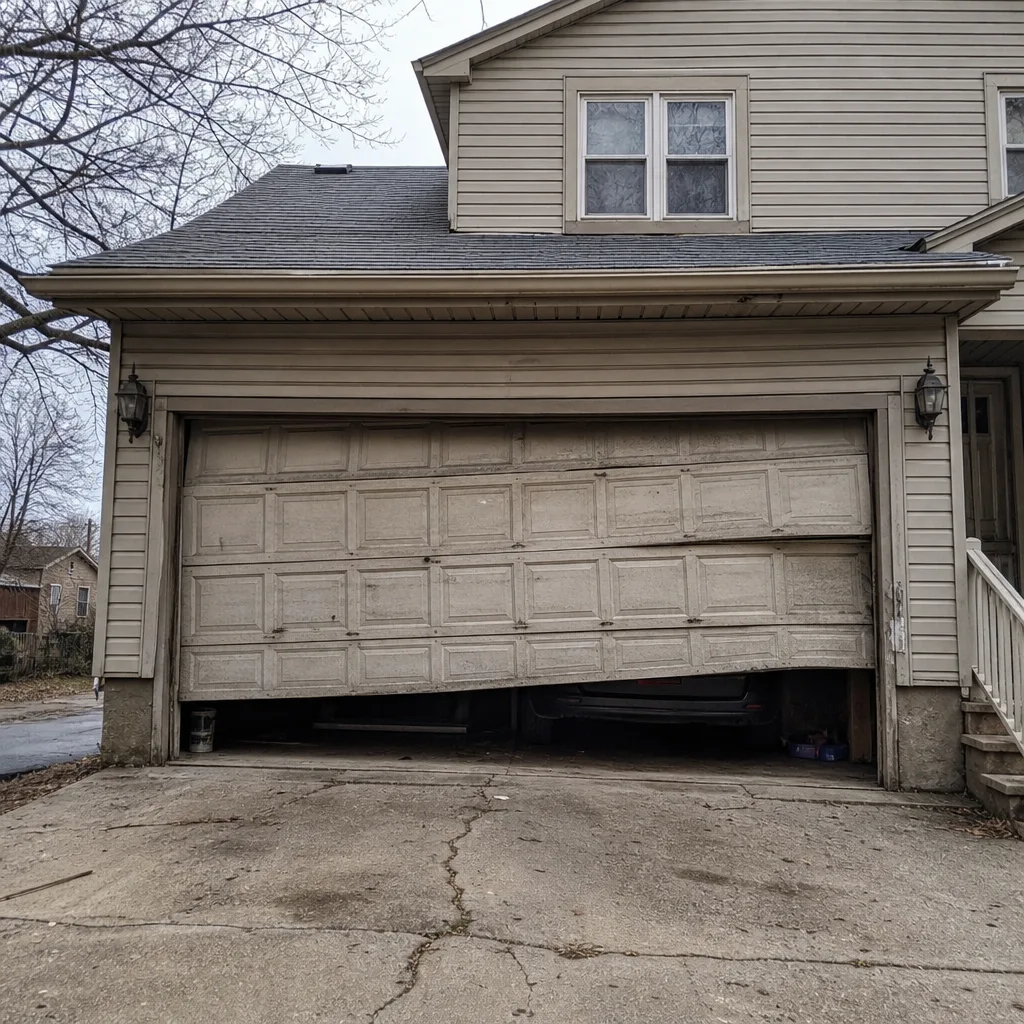
See the difference
 Before
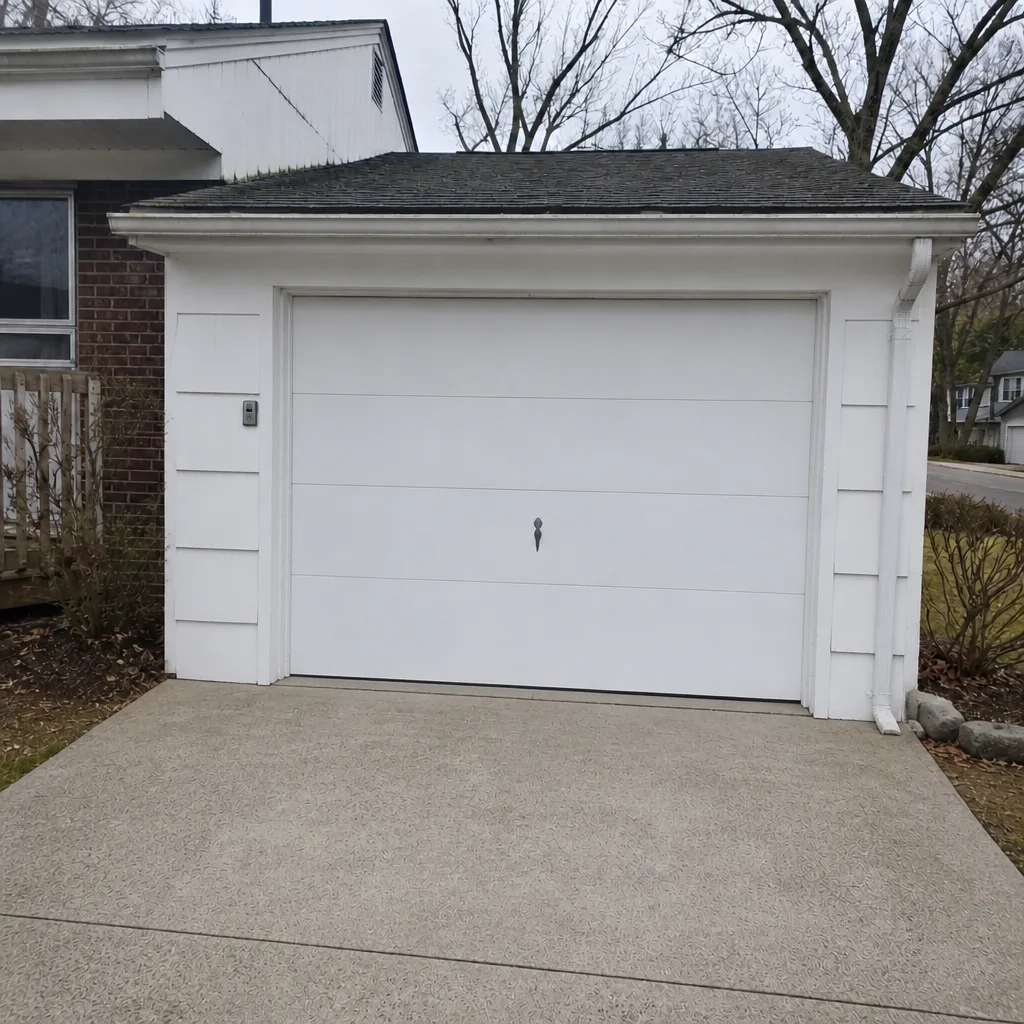 After
 Before
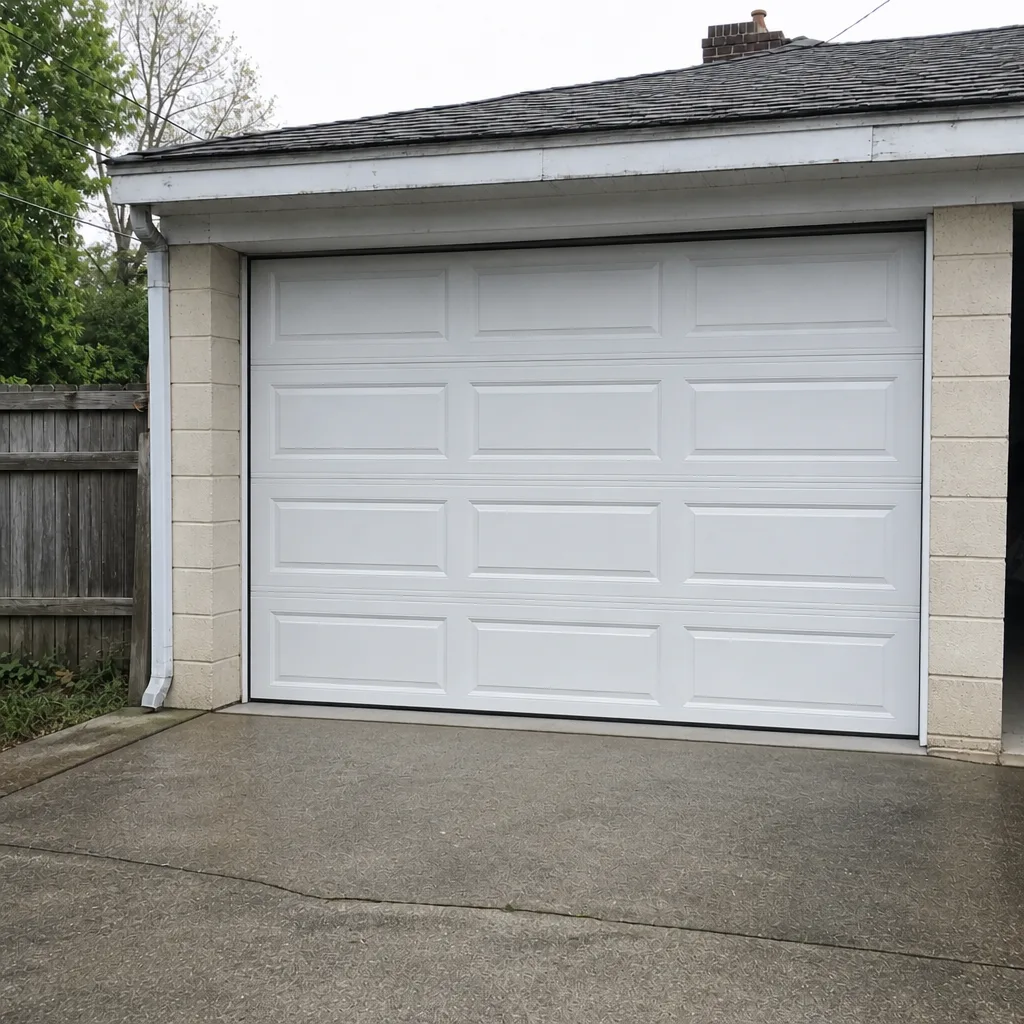 After
 Before
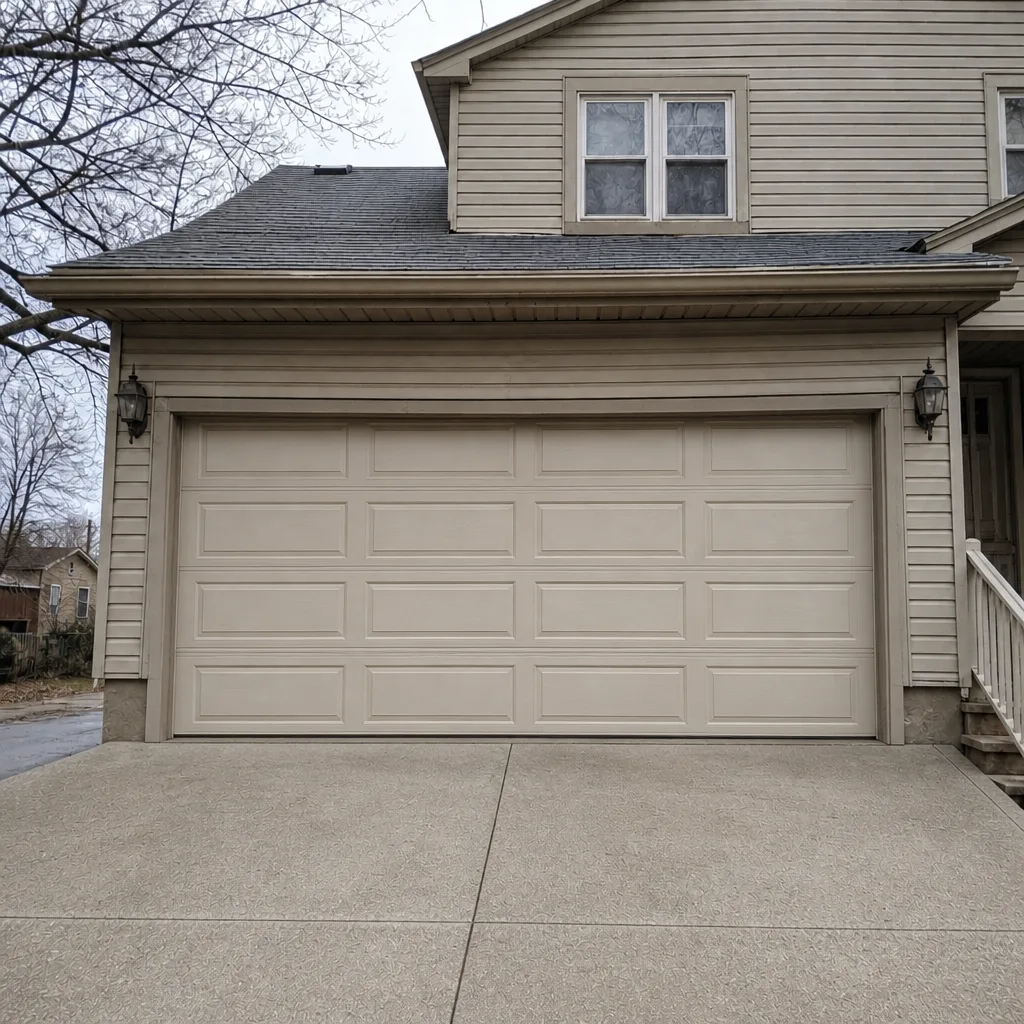 After
Common Mistakes to Avoid
- Following the “once-a-year” lubrication advice. That schedule assumes a door that cycles daily. On an idle door, hinges and torsion shafts dry out long before the annual mark. Lubricate quarterly.
- Greasing the tracks. Tracks run dry. Grease traps grit, and grit is what causes doors to bind and wear, particularly in urban garages with less airflow.
- Testing the safety reverse with a light touch. The door should reverse against a solid object, not just a hand tap. A too-gentle test passes on a door that would not actually reverse in a real obstruction.
- Ignoring the bottom seal. A failing U-seal on a below-grade garage lets moisture onto the door panels and bottom bracket, and that’s where the failure that matters begins.
- DIY spring or cable work. The most serious injury risk on any garage door. Visual inspection only. Call a trained technician if a spring looks damaged.
- Assuming the opener needs replacing when the door needs repair. A door that won’t close is often a sensor or travel limit issue, not a fried opener. Brand-specific diagnostics saves a replacement.
- Leaving a door at the halfway point for weeks. On an idle Upper West Side door, that means half the spring stays under tension against a damp surface while the rest resets. Either use it or store it fully closed.
When to Call a Professional
Most of this guide is safe to do yourself: lubrication, seal inspection, sensor testing, tightening hardware. The line is where load or tension is involved. Call a trained technician when:
- Any spring shows a visible gap, a rust bloom over more than 25% of the coil, or a visibly bent arm.
- The door is unbalanced at the halfway point, meaning it won’t hold when you lift it and let go with the opener disconnected.
- A cable is frayed, kinked, or has jumped off a drum.
- The bottom bracket is rusted enough that the door performs unevenly, or a hinge plate is loose.
- The safety reverse fails the shoebox test after you’ve aligned the sensors and checked the lens for dust.
- The door won’t open or close and the opener motor runs but the door doesn’t move.
Garage Door Repair Upper West Side offers free estimates in Upper West Side, and we treat spring failure as the safety issue it is, not a routine job. Call (866) 937-7438 and we’ll give you an upfront price in writing before any work starts.
Frequently Asked Questions
Every quarter if the door runs fewer than four times a week, and every month if it sits idle for long stretches in a variable-temperature garage. The standard annual schedule assumes daily cycling that redistributes the product; an idle door needs more frequent recoating, not less. Lubricate hinges, torsion shaft, roller stems, and bearing plates with white lithium or silicone product, and leave the tracks dry. Call (866) 937-7438 if the door is louder after lubricating, since that usually means a mechanical issue rather than a lubrication one.
No. Torsion and extension springs sit under extreme tension and can cause serious injury if handled without proper tools and training. Visual inspection only. If the spring shows any rust bloom, an open coil gap, or a visible bend, stop using the door and call a trained technician. Spring repair is one of the most dangerous jobs in the trade for a reason.
Idle-use patterns combined with a below-grade or variable-temperature garage accelerate surface corrosion faster than cycle wear does. Springs and hinges that sit under tension in a damp space accumulate condensation on the same surfaces for days at a time, and that’s where pitting begins. The quarterly below-grade inspection is written to catch this early. Call (866) 937-7438 if the rust covers more than a spot or two.
Place a solid object roughly the height of a shoebox flat on the floor in the door’s path and close the door with the wall control or remote. The door should reverse on contact. Remove the object and repeat with the photo-eye sensor blocked by hand; the door should reverse without contact. If it doesn’t reverse on either test after you’ve aligned sensors and cleaned the lenses, that’s an opener issue and worth a call. Call (866) 937-7438 for an evaluation.
Typical Upper West Side garage door tune-ups fall in a per-job estimate range, and the written quote you receive is the final price. Because pricing depends on the door configuration, brand (Clopay, Amarr, Wayne Dalton, and the LiftMaster/Chamberlain/Genie/Craftsman opener lines all have different parts), and the conditions of the space, we quote before any work starts. Call (866) 937-7438 for a free estimate.
Replace when panels are structurally damaged, delaminated, or rusted through, or when the door has failed at multiple points on the same cycle (spring, then opener, then hinge plates) in a short timeframe. Repair when a single component has failed and the rest of the assembly is sound. Brand-specific diagnostics will tell you which side of that line you’re on. Call (866) 937-7438 for a free estimate and an honest read.
The Bottom Line
The maintenance checklist that matters on the Upper West Side isn’t a straight copy of a suburban guide, because most doors here don’t cycle the way suburban doors do. Focus on spring and hinge corrosion first, lubricate quarterly not annually, keep the below-grade and bottom-seal checks running through the year, and test the safety reverse every month. Move the complicated or load-bearing work to a specialist. One call covers repair, install, opener, and emergency for the brands already in your garage, and we work on the equipment that’s already installed rather than pushing a replacement. Call (866) 937-7438 for a free estimate.
Written by the team at Garage Door Repair Upper West Side.